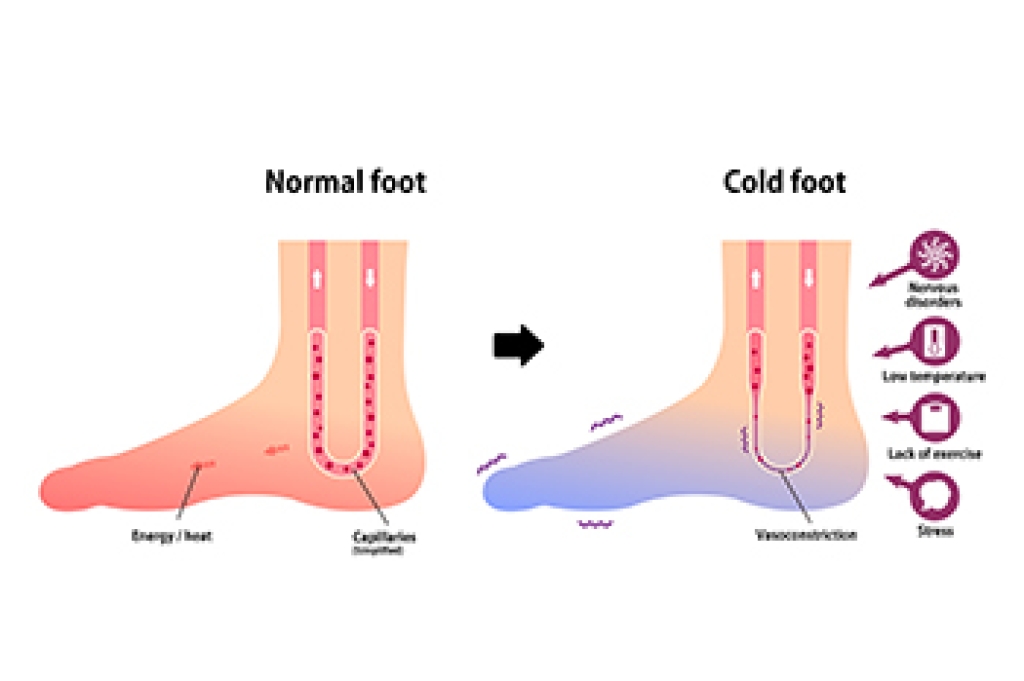
Foot and Toe Injuries Related to Cold Temperatures

Cold-related foot injuries, such as frostbite, chilblains, and trench foot, occur when feet are exposed to prolonged cold and damp conditions. Frostbite happens in freezing temperatures, leading to tissue damage as blood flow slows. Symptoms include numbness, discoloration, and potentially blistering. Chilblains, or painful, itchy swelling, develop when skin repeatedly warms up too quickly after cold exposure, causing blood vessels to leak. Trench foot, resulting from prolonged dampness in cold conditions, leads to tissue breakdown, swelling, and pain. These injuries are especially common among outdoor workers, hikers, and individuals without proper cold-weather footwear. Prevention involves wearing insulated, moisture-wicking socks and waterproof boots to keep feet warm and dry. If symptoms develop, it is suggested that you rewarm feet and visit a podiatrist promptly, so that the severity can be assessed and complications avoided.

Toe pain can disrupt your daily activities. If you have any concerns, contact James Torhorst, DPM of Torhorst Foot and Ankle. Our doctor can provide the care you need to keep you pain-free and on your feet.

What Causes Toe Pain?

Most severe toe pain is caused due to a sports injury, trauma from dropping something heavy on the toe, or bumping into something rigid. Other problems can develop over time for various reasons.

Toe pain can be caused by one or more ailments. The most common include:

  • Trauma
  • Sports injury
  • Wearing shoes that are too tight
  • Arthritis
  • Gout
  • Corns and calluses
  • Hammertoe
  • Bunions
  • Blisters
  • Ingrown toenails
  • Sprains
  • Fractures (broken bones)
  • Dislocations

When to See a Podiatrist

  • Severe pain
  • Persistent pain that lasts more than a week
  • Signs of infection
  • Continued swelling
  • Pain that prevents walking

Diagnosis

In many cases the cause of toe pain is obvious, but in others, a podiatrist may want to use more advanced methods to determine the problem. These can range from simple visual inspections and sensation tests to X-rays and MRI scans. Prior medical history, family medical history, and any recent physical traumatic events will all be taken into consideration for a proper diagnosis.

Treatment

Treatments for toe pain and injuries vary and may include shoe inserts, padding, taping, medicines, injections, and in some cases, surgery. If you believe that you have broken a toe, please see a podiatrist as soon as possible.

If you have any questions please contact our offices located in Waupaca and Stevens Point, WI . We offer the newest diagnostic and treatment technologies for all your foot and ankle needs.


Read more about Toe Pain

Do Your Child's Feet Hurt?

Have your child's feet been examined lately? Healthy feet are happy feet. If your child is complaining of foot pain, it may be a sign of underlying problems.

Poorly Fitting Sandals Put Feet at Risk

Sandals can feel cool and convenient, but the wrong pair can leave the feet sore after a day of walking or standing. Paper-thin soles provide little protection from repeated contact with hard floor or pavement. This can strain the heels, arches, and balls of the feet. Sandals that lack arch support can also place extra stress on the band of tissue along the bottom of the foot. The result can be heel pain or plantar fasciitis, which is irritation of that tissue. Blisters and calluses can also develop when stiff edges or rough straps rub against the skin.

Loose sandals create another problem, because the toes must grip the footbed to keep each sandal in place. This repeated gripping can tire foot muscles, shorten a person’s stride, and change the way the body moves. Foot pain can then spread into the ankles or lower legs. Sandals that are too flexible fail to steady the arch. Meanwhile, more rigid soles limit natural foot movement. Poor sizing adds further risks. Toes that extend past the front can be injured, and heels that hang over the back receive less protection. Worn sandals can also lose cushioning, tread, and support.

A podiatrist can examine the feet and identify the source of pain. During the evaluation, the podiatrist looks for tenderness, skin irritation, and limited joint movement to see if foot structure increases pressure inside the sandals. The podiatrist can recommend sandals with moderate cushioning, a stable arch area, and adjustable straps. A secure heel or ankle strap reduces toe-gripping and supports a steadier walking pattern. The entire foot should rest within the footbed without crowding or hanging over its edges. Patients with diabetes, poor circulation, or reduced feeling in their feet should seek podiatric guidance about sandal selection. If you have foot pain after wearing sandals, it is suggested that you schedule an appointment with a podiatrist for effective relief tips, and guidance on choosing appropriate sandals.

Foot Pain

Foot pain can be extremely painful and debilitating. If you have a foot pain, consult with James Torhorst, DPM  from Torhorst Foot and Ankle. Our doctor will assess your condition and provide you with quality foot and ankle treatment.

Causes

Foot pain is a very broad condition that could be caused by one or more ailments. The most common include:

  • Bunions
  • Hammertoes
  • Plantar Fasciitis
  • Bone Spurs
  • Corns
  • Tarsal Tunnel Syndrome
  • Ingrown Toenails
  • Arthritis (such as Gout, Rheumatoid, and Osteoarthritis)
  • Flat Feet
  • Injury (from stress fractures, broken toe, foot, ankle, Achilles tendon ruptures, and sprains)
  • And more

Diagnosis

To figure out the cause of foot pain, podiatrists utilize several different methods. This can range from simple visual inspections and sensation tests to X-rays and MRI scans. Prior medical history, family medical history, and any recent physical traumatic events will all be taken into consideration for a proper diagnosis.

Treatment

Treatment depends upon the cause of the foot pain. Whether it is resting, staying off the foot, or having surgery; podiatrists have a number of treatment options available for foot pain.

If you have any questions, please feel free to contact our offices located in Waupaca and Stevens Point, WI . We offer the newest diagnostic and treatment technologies for all your foot care needs.

Read more about Foot Pain

Broken Ankle Treatment for Better Foot and Ankle Health

A broken ankle is an injury that occurs when one or more bones in the ankle are cracked or fractured. The ankle is made up of several bones, ligaments, and tissues that work together to support movement and balance. A fracture can happen from a fall, sports injury, accident, or sudden twisting motion. Ankle fractures can affect a person’s ability to stand, walk, and complete daily activities comfortably. Symptoms include pain, swelling, bruising, tenderness, and difficulty putting weight on the affected foot. Some patients may notice changes in the appearance of the ankle or a feeling of instability. A podiatrist can evaluate the injury and determine the severity of the fracture.

A podiatrist performs a detailed examination to understand the extent of an ankle fracture and how it affects foot and ankle function. The evaluation includes reviewing the injury, checking movement, and assessing the condition of the surrounding tissues. Imaging tests may be used to view the bones and identify the location of the fracture. A podiatrist develops a treatment plan based on the type of fracture, the patient’s health, and activity needs. Treatment includes methods to support proper healing, protect the injured area, and restore ankle function. 

Research shows that ankle fractures can affect mobility and long-term joint function, making proper diagnosis and treatment important. A podiatrist helps patients understand their injury and creates a plan focused on restoring strength, stability, and movement. Care may involve monitoring healing progress and addressing changes in foot mechanics after the injury. A podiatrist also evaluates how the ankle is functioning because changes in movement can affect other areas of the foot and lower body. Treatment plans are personalized according to each patient’s condition and recovery goals. If you have symptoms of a broken ankle, it is suggested that you make an appointment with a chiropractor for diagnosis and treatment.

Broken ankles need immediate treatment. If you are seeking treatment, contact James Torhorst, DPM from Torhorst Foot and Ankle. Our doctor can provide the care you need to keep you pain-free and on your feet. 

Broken Ankles
A broken ankle is experienced when a person fractures their tibia or fibula in the lower leg and ankle area. Both of these bones are attached at the bottom of the leg and combine to form what we know to be our ankle.

When a physician is referring to a break of the ankle, he or she is usually referring to a break in the area where the tibia and fibula are joined to create our ankle joint. Ankles are more prone to fractures because the ankle is an area that suffers a lot of pressure and stress. There are some obvious signs when a person experiences a fractured ankle, and the following symptoms may be present.

Symptoms of a Fractured Ankle

  • Excessive pain when the area is touched or when any pressure is placed on the ankle
  • Swelling around the area
  • Bruising of the area
  • Area appears to be deformed

If you suspect an ankle fracture, it is recommended to seek treatment as soon as possible. The sooner you have your podiatrist diagnose the fracture, the quicker you’ll be on the way towards recovery.

If you have any questions, please feel free to contact our offices located in Waupaca and Stevens Point, WI . We offer the newest diagnostic and treatment technologies for all your foot care needs.

Read more about All About Broken Ankles

Getting the Right Diagnosis and Treatment for Heel Pain

Heel pain can make it difficult to stay active and enjoy everyday activities. The discomfort can develop gradually or begin after an injury. Pain is often felt on the bottom or back of the heel and can become worse with the first few steps after getting out of bed or after sitting for a long time. Several conditions can cause heel pain, including plantar fasciitis, Achilles tendon injuries, and heel bursitis. Bursitis is inflammation of a fluid-filled sac that cushions joints and tendons. Standing for long periods, repeated stress, and wearing shoes that lack proper support also can increase pressure on the heel. Identifying the exact cause of the pain is important because different conditions require different treatments.

A podiatrist performs a detailed examination to determine why the heel hurts and how the condition affects foot function. The evaluation includes checking the heel for tenderness, swelling, and range of motion. The podiatrist also examines the foot's structure and observes how the patient stands and walks because changes in movement can increase stress on the heel. Imaging tests, like X-rays or ultrasound, provide additional information when a fracture, tendon injury, or another condition is suspected. Ultrasound uses sound waves to create images of soft tissues, including tendons and ligaments. An accurate diagnosis allows the podiatrist to develop a treatment plan that matches the patient's condition and activity level.

Treatment focuses on relieving pain while improving foot function and reducing stress on the heel. A podiatrist can recommend custom orthotics to improve foot alignment and distribute pressure more evenly across the foot. Care also includes guided stretching and strengthening exercises that improve flexibility and support the muscles and tendons of the foot and ankle. The podiatrist can recommend shoes that fit properly and provide good support to reduce strain while walking. Patients with severe heel pain that does not improve with conservative treatment can benefit from surgery in selected cases. If you have symptoms of heel pain, it is suggested that you schedule an appointment with a podiatrist for diagnosis and treatment.

Many people suffer from bouts of heel pain. For more information, contact James Torhorst, DPM of Torhorst Foot and Ankle. Our doctor can provide the care you need to keep you pain-free and on your feet.

Causes of Heel Pain

Heel pain is often associated with plantar fasciitis. The plantar fascia is a band of tissues that extends along the bottom of the foot. A rip or tear in this ligament can cause inflammation of the tissue.

Achilles tendonitis is another cause of heel pain. Inflammation of the Achilles tendon will cause pain from fractures and muscle tearing. Lack of flexibility is also another symptom.

Heel spurs are another cause of pain. When the tissues of the plantar fascia undergo a great deal of stress, it can lead to ligament separation from the heel bone, causing heel spurs.

Why Might Heel Pain Occur?

  • Wearing ill-fitting shoes                
  • Wearing non-supportive shoes
  • Weight change           
  • Excessive running

Treatments

Heel pain should be treated as soon as possible for immediate results. Keeping your feet in a stress-free environment will help. If you suffer from Achilles tendonitis or plantar fasciitis, applying ice will reduce the swelling. Stretching before an exercise like running will help the muscles. Using all these tips will help make heel pain a condition of the past.

If you have any questions, please feel free to contact our offices located in Waupaca and Stevens Point, WI . We offer the newest diagnostic and treatment technologies for all your foot care needs.

Read more about Heel Pain

Connect With Us